Am I Eligible For Social Security Benefits As A Spouse?

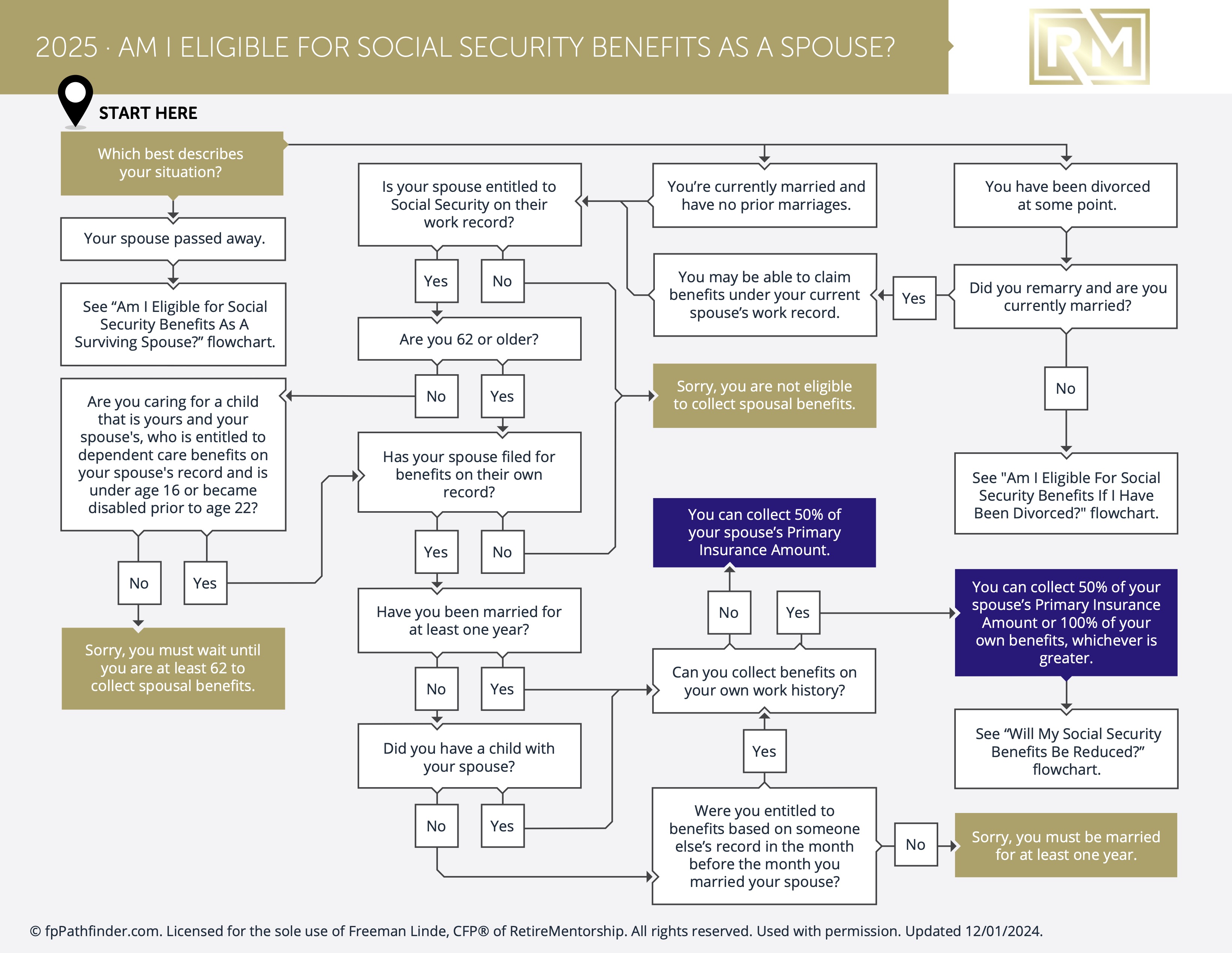
Am I Eligible For Social Security Benefits As A Spouse? This flowchart will guide you through the variables determining eligibility.
Understanding Social Security benefits can be a complex endeavor, especially when considering eligibility as a spouse. Many individuals may wonder whether they qualify for benefits based on their spouse’s work history. In this comprehensive guide, we’ll delve into the intricacies of Social Security eligibility for spouses, providing clarity on who qualifies and how to navigate the process.
Understanding Spousal Benefits
Social Security offers spousal benefits as part of its program to provide financial support to retirees, disabled individuals, and their families. Spousal benefits allow a spouse to claim a portion of their partner’s Social Security earnings, even if they haven’t worked themselves or have limited work history.
Eligibility Criteria for Social Security Benefits As a Spouse
To be eligible for spousal benefits, several criteria must be met:
- Marital Status: The individual must be legally married to the primary earner, typically for at least one year.
- Age: Generally, the spouse seeking benefits must be at least 62 years old, which is the earliest age to claim Social Security benefits.
- Primary Earner’s Eligibility: The primary earner must have filed for their own Social Security benefits. Typically, this occurs at full retirement age, which varies depending on the individual’s birth year.
- Benefits Comparison: The spousal benefits should be less than what the spouse would receive based on their own work record. If the individual is eligible for higher benefits based on their own earnings, they won’t receive additional spousal benefits.
- Current Marital Status: If the spouse is divorced, they may still be eligible for spousal benefits if certain conditions are met, such as being unmarried and aged 62 or older.
How to Apply
Applying for spousal benefits is a relatively straightforward process. The spouse seeking benefits can apply online through the Social Security Administration’s website or by scheduling an appointment at their local Social Security office. It’s essential to have the necessary documents on hand, including proof of marriage and identification.
Maximizing Benefits
Understanding the nuances of Social Security rules can help spouses maximize their benefits. For example, delaying the claim for spousal benefits until full retirement age can result in higher monthly payments. Additionally, coordinating benefits with a spouse can ensure both individuals receive the maximum amount possible over their lifetimes.
Conclusion
Navigating Social Security benefits as a spouse requires a clear understanding of eligibility criteria and application procedures. By familiarizing yourself with the rules and consulting with Social Security representatives if needed, you can ensure that you receive the benefits you’re entitled to based on your spouse’s work history. Remember, thorough research and timely action can make a significant difference in securing your financial well-being during retirement.
Want More? Become a RetireMember!
Get my book, 3D Retirement Income, for free, as well as access to live events, checklists and flowcharts, and wise counsel from one of the best minds in behavioral investing. Join today for free.
Need Help? Work with Me.
Schedule a Discovery Meeting with me through my Financial Planning firm, La Crosse Financial Planning. This no-cost, no-obligation conversation will determine what you are looking for and how we can help you retire successfully and stay successfully retired.
This article is educational only and is not intended to be investment, legal, or tax advice or recommendations, whether direct or incidental. Again, this is not investment advice. Consult your financial, tax, and legal professionals for specific advice related to your specific situation. Never take investment advice from someone who doesn’t know you and your specific situation. All opinions expressed in this article are those of the people expressing them. Any performance referenced is historical and is no guarantee of future results. All indices are unmanaged and may not be directly invested in.