Am I Eligible For Medicare Part A And Part B?

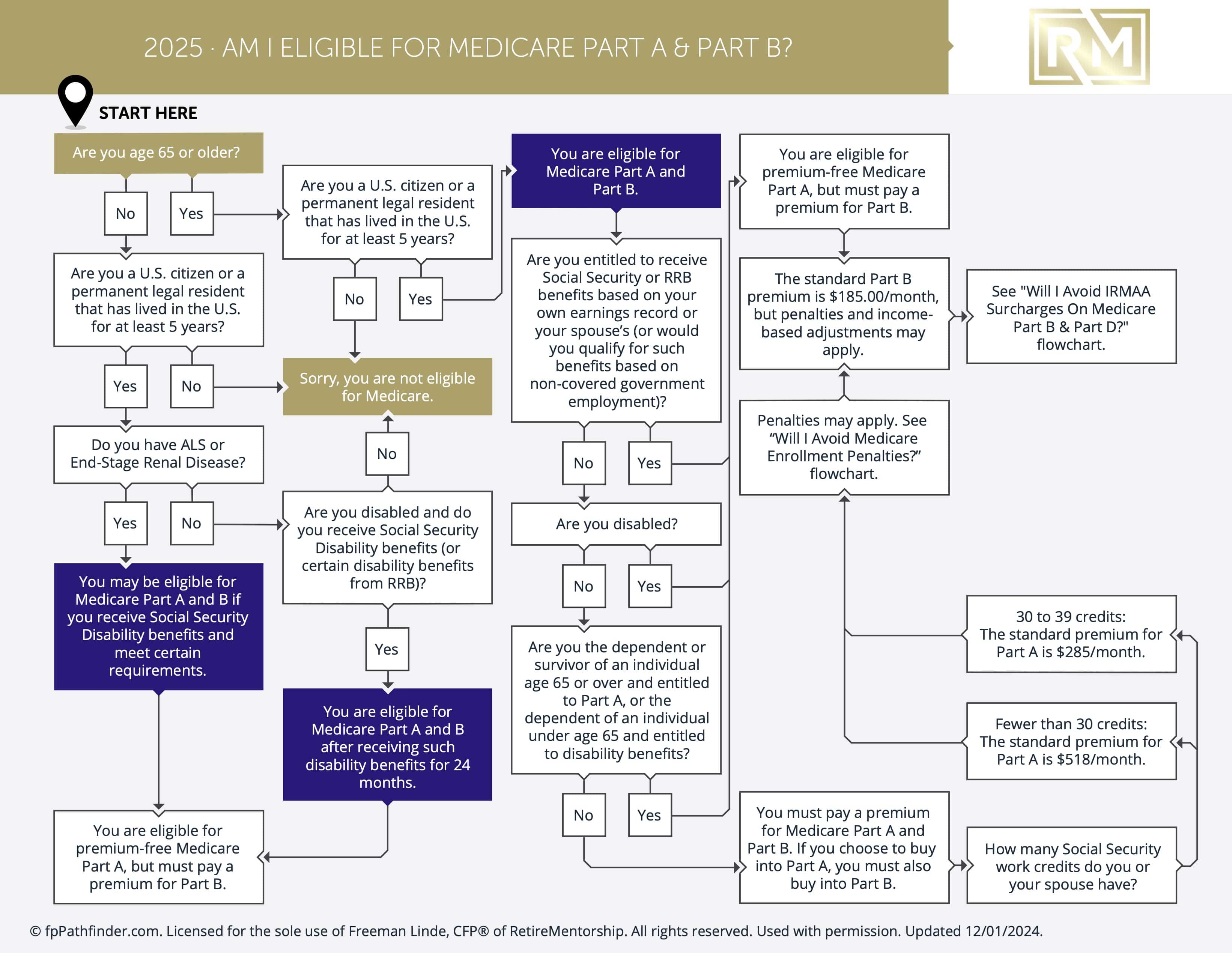
Am I Eligible For Medicare Part A And Part B? This flowchart will walk you through discovering your Medicare Eligibility.
Navigating the realm of Medicare can be overwhelming, especially when determining eligibility for its various parts. Medicare Part A and Part B, often referred to as Original Medicare, form the foundation of many beneficiaries’ healthcare coverage. In this guide, we’ll delve into the eligibility criteria for Medicare Parts A and B, providing clarity on who qualifies and how to assess your eligibility status.
Understanding Medicare Part A and Part B
Medicare Part A covers hospital services, skilled nursing facility care, hospice care, and some home health services. On the other hand, Medicare Part B encompasses medical services such as doctor’s visits, outpatient care, preventive services, and durable medical equipment.
Eligibility Criteria for Medicare Part A and Part B
To determine if you’re eligible for Medicare Parts A and B, consider the following factors:
- Age: Individuals aged 65 or older are typically eligible for Medicare. However, certain exceptions apply, such as qualifying for Medicare due to a disability or specific medical conditions.
- U.S. Citizenship or Legal Residency: You must be a U.S. citizen or a legal resident who has lived in the country for at least five continuous years to qualify for Medicare.
- Work History: Most individuals qualify for premium-free Medicare Part A based on their own or their spouse’s work history. Generally, you or your spouse must have worked and paid Medicare taxes for at least ten years (40 quarters) to qualify for premium-free Part A. However, even if you don’t qualify for premium-free Part A, you may still be eligible to purchase it.
- Enrollment Periods: It’s essential to enroll in Medicare during your Initial Enrollment Period (IEP), which begins three months before your 65th birthday month and ends three months after. Missing your IEP may result in penalties or delays in coverage unless you qualify for a Special Enrollment Period (SEP).
How to Determine Your Eligibility
To assess your eligibility for Medicare Parts A and B, follow these steps:
- Review Your Age and Citizenship Status: Confirm that you meet the age and citizenship or residency requirements for Medicare.
- Evaluate Your Work History: Determine if you or your spouse have accumulated enough work credits to qualify for premium-free Medicare Part A.
- Understand Enrollment Periods: Familiarize yourself with Medicare enrollment periods to ensure timely enrollment and avoid penalties.
Conclusion
Understanding your eligibility for Medicare Parts A and B is crucial for accessing essential healthcare coverage during your retirement years. By assessing your age, citizenship status, work history, and enrollment periods, you can determine if you qualify for these vital benefits. Remember, timely enrollment is key to avoiding penalties and ensuring seamless access to healthcare services under Medicare. If you have any questions or need assistance with the enrollment process, consider consulting with a Medicare expert or contacting the Social Security Administration for guidance.
Want More? Become a RetireMember!
Get my book, 3D Retirement Income, for free, as well as access to live events, checklists and flowcharts, and wise counsel from one of the best minds in behavioral investing. Join today for free.
Need Help? Work with Me.
Schedule a Discovery Meeting with me through my Financial Planning firm, La Crosse Financial Planning. This no-cost, no-obligation conversation will determine what you are looking for and how we can help you retire successfully and stay successfully retired.
This article is educational only and is not intended to be investment, legal, or tax advice or recommendations, whether direct or incidental. Again, this is not investment advice. Consult your financial, tax, and legal professionals for specific advice related to your specific situation. Never take investment advice from someone who doesn’t know you and your specific situation. All opinions expressed in this article are those of the people expressing them. Any performance referenced is historical and is no guarantee of future results. All indices are unmanaged and may not be directly invested in.