Is My Rental Property Tax Deductible?

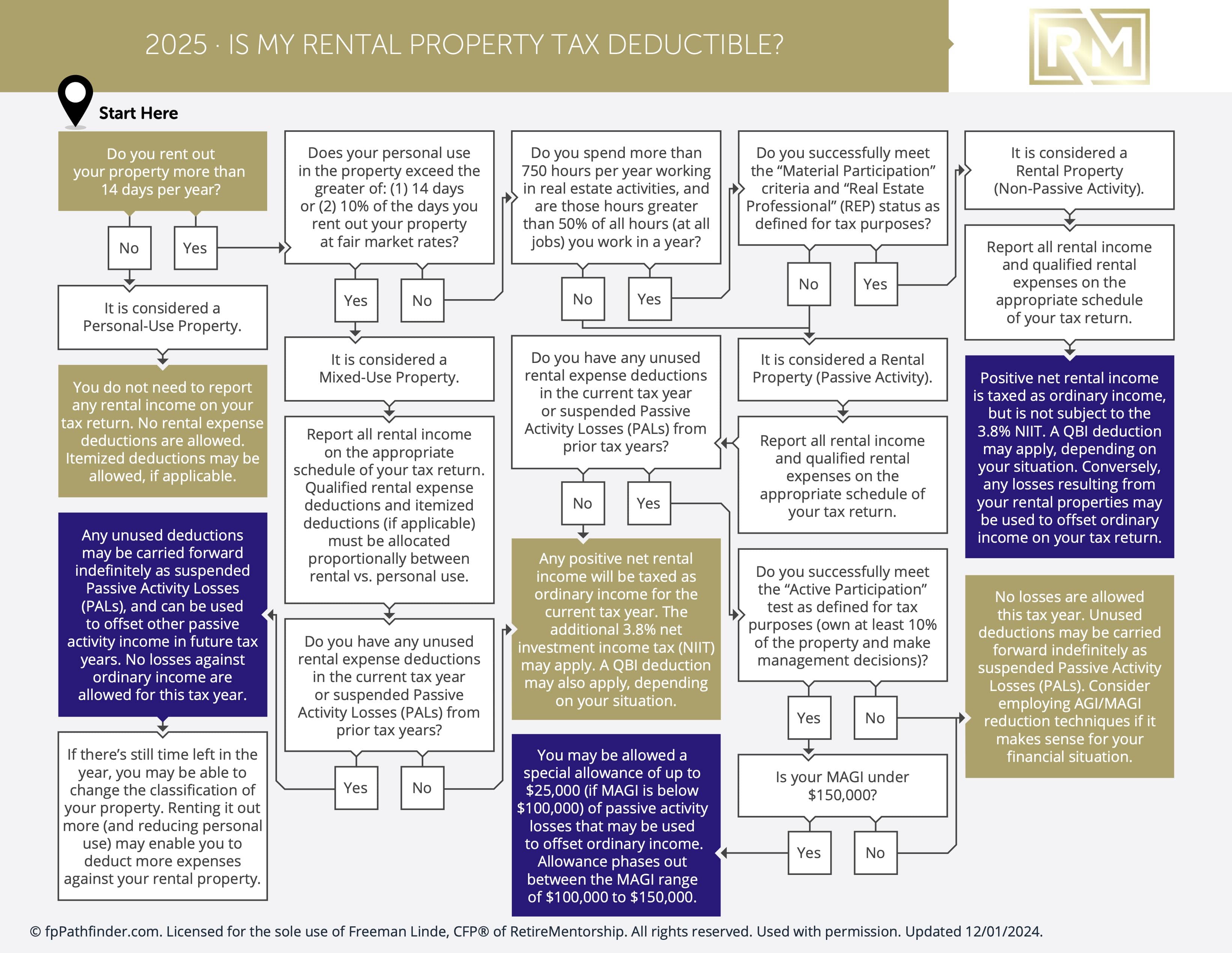
Is My Rental Property Tax Deductible? This flowchart will walk you through discovering your eligibility.
When it comes to rental properties, understanding the tax implications is crucial for landlords. Here’s a concise guide to help you determine if your rental property is tax-deductible.
Determinants
- Mortgage Interest: One of the most significant tax deductions for rental property owners is mortgage interest. You can deduct the interest you pay on the mortgage used to acquire or improve the rental property.
- Property Taxes: Property taxes paid on your rental property are also deductible. This includes any state, local, or foreign taxes levied on the property.
- Operating Expenses: Ordinary and necessary expenses related to the operation of the rental property are generally deductible. This includes maintenance, repairs, utilities, insurance, and property management fees.
- Depreciation: The cost of the rental property can be deducted over time through depreciation. This allows you to recover the cost of the property gradually over its useful life.
- Travel Expenses: If you travel to your rental property for maintenance or management purposes, you can deduct related expenses such as mileage, lodging, and meals.
- Home Office Deduction: If you use a portion of your home exclusively for rental activities, you may qualify for a home office deduction. This allows you to deduct expenses related to that portion of your home, such as utilities and insurance.
- Repairs vs. Improvements: While repairs are fully deductible in the year they are incurred, improvements must be depreciated over time. It’s essential to distinguish between the two for accurate tax reporting.
- Passive Activity Losses: If you actively participate in managing your rental property, you may be able to deduct up to $25,000 in losses against other income, subject to income limitations.
- Qualified Business Income Deduction (QBI): Under certain circumstances, rental income may qualify for the QBI deduction, allowing eligible taxpayers to deduct up to 20% of their rental income.
- Consult a Tax Professional: Indeed tax laws regarding rental properties can be complex and subject to change. Consulting with a tax professional can help ensure you’re maximizing your deductions and complying with current tax regulations.
Conclusion
In conclusion, rental property owners can benefit from various tax deductions that can help reduce their taxable income and increase their cash flow. Understanding the deductible expenses associated with rental properties is essential for optimizing tax savings and maximizing profitability.
Want More? Become a RetireMember!
Get my book, 3D Retirement Income, for free, as well as access to live events, checklists and flowcharts, and wise counsel from one of the best minds in behavioral investing. Join today for free.
Need Help? Work with Me.
Schedule a Discovery Meeting with me through my Financial Planning firm, La Crosse Financial Planning. This no-cost, no-obligation conversation will determine what you are looking for and how we can help you retire successfully and stay successfully retired.
This article is educational only and is not intended to be investment, legal, or tax advice or recommendations, whether direct or incidental. Again, this is not investment advice. Consult your financial, tax, and legal professionals for specific advice related to your specific situation. Never take investment advice from someone who doesn’t know you and your specific situation. All opinions expressed in this article are those of the people expressing them. Any performance referenced is historical and is no guarantee of future results. All indices are unmanaged and may not be directly invested in.