Ten Changes of the One Big Beautiful Bill Act (OBBBA)

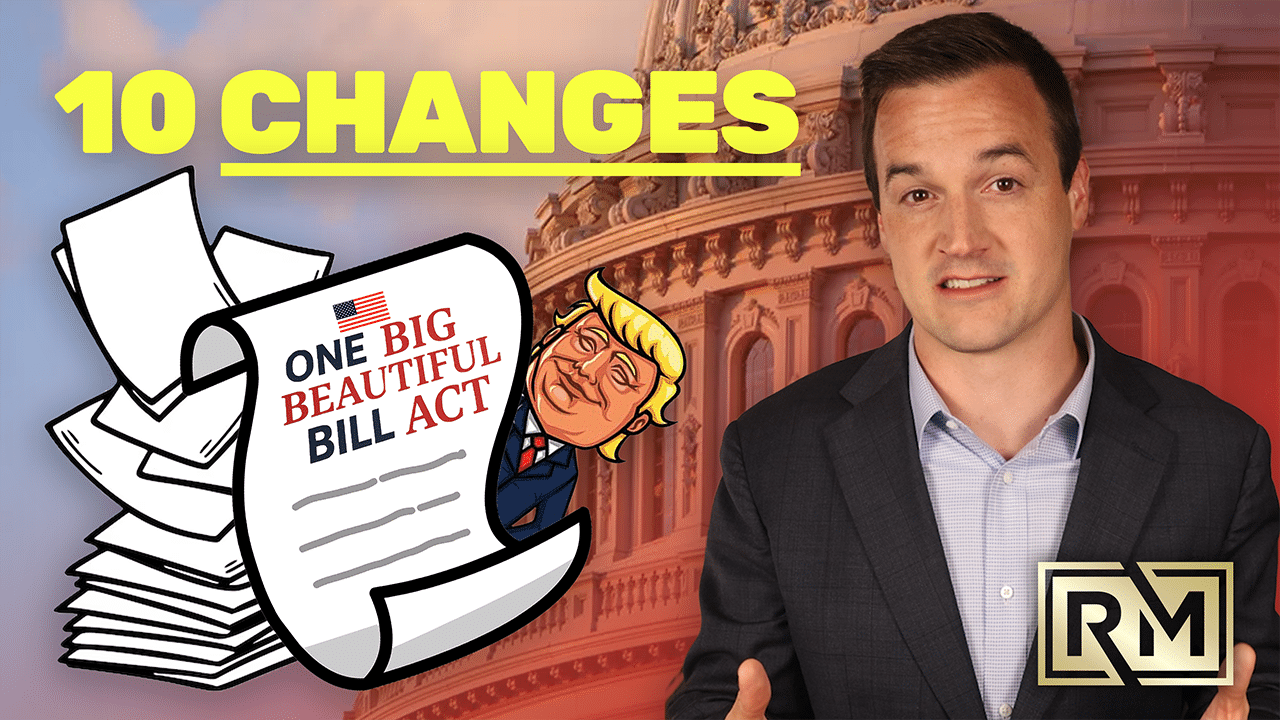
The One Big Beautiful Bill Act (OBBBA) is a landmark tax bill signed into law on July 4th that impacts every single American. While we won’t know the exact implementation details of all these provisions until later, here are ten tenets of the OBBBA that may impact you. I’ll bulletize the changes and add some “What this means” commentary.
Ten Changes of the One Big Beautiful Bill Act (OBBBA)
1. Extension Of Low Tax Brackets
- Permanent extension of 2017 Tax Cuts and Jobs Act (TCJA) provisions, locking in current income-tax brackets and deductions.
What this means: No more automatic tax bracket increases for 2026 as the TCJA sunsets. This is fantastic news for anyone making over $55,000 as a household or $25,000 as an individual, as it locks in tax brackets starting with the 12% tax rate.
2. Standard Deduction Increases
- Standard deduction increases for 2025 of about $750 per person: Married filing jointly – $31,500; single/separate – $15,750; head of household – $23,625 (includes OBBBA bump).
- Senior bonus deduction: Additional $6,000 (individual) or $12,000 (married couples) for age 65+, through 2028.
A higher Standard Deduction means less tax. Period.
3. Temporary Increase In SALT Cap To $40,000 (Per Household)
For those who Itemize Deductions, the State and Local Taxes (SALT) that can be deducted are capped at $10,000.
- Base cap raised from $10,000 to $40,000 for tax years 2025 through 2029 .
- Specifically implemented as $40,000 in 2025, then $40,400 in 2026, and increasing by 1% annually through 2029.
- In 2030, the cap reverts to $10,000 (and $5,000 for married filing separately) and becomes permanent unless further legislation is passed. It phases out for MFJ filers over $500,000.
Many individuals take the Standard Deduction because their Itemizable deductions are primarily SALT, Mortgage Interest, and Charitable contributions. With a higher SALT cap, more families can itemize and pay less taxes.
4. Car Loan Interest Deduction
- Up to a $10,000 deduction for interest on new U.S.-assembled vehicle loans.
- Only on New Vehicles loans for purchases between 2025 and 2028, with no carryover, and no applicability to leases.
- Eligible even if claiming the Standard Deduction.
- Phased out for Incomes over $100,000 single, $250,000 MFJ.
I don’t really recommend buying new cars, but if you are going to, this will add some relief. Keep in mind that tax deductions don’t make up for wasted money. A $60,000 vehicle at 5% interest will generate less than $3,000 in interest, and the new deduction will save you $600-$700 in taxes for the first year. That doesn’t make up for the $1,100 monthly payment.
5. Child And Dependent Care Enhancements
- The Child Tax Credit was raised to $2,200 per child, adjusted annually for inflation.
- The Dependent Care FSA limit was raised to $7,500 from $5,000.
- The Child and Dependent Care Tax Credit has been expanded to allow a higher credit for families with incomes between $43,000 and $206,000 who pay for childcare.
- The Employer-Provided Child Care Credit for Businesses was added, incentivizing businesses to subsidize care for their employees.
More tax relief for families with children, particularly young children who need hired care.
6. Trump Accounts For Children
- A tax-deferred savings account for children, allowing up to $5,000/yr in contributions from parents or others.
- Employers may contribute up to $2,500 annually per account, treated as non-taxable income, and is included in the $5,000 max.
- Children born between 2025 and 2028 receive $1,000 from the US Treasury. There are additional funding options and restrictions for these accounts.
- Accounts can be invested in low-cost index funds.
- Account turns over to the child at age 18, and withdrawals are taxed at Capital Gains rates.
Get the free money if you can. There will likely be some IRS clarifications on these accounts in the future, and implementing them could take time. This will likely replace UTMA accounts as the preferred general savings account for children.
7. No Social Security Taxation Changes
- Previous versions included direct reduction in the taxability of Social Security, but those are absent in the final bill.
- Senior Bonus Standard Deduction (Item 2) will eliminate taxes on many retirees’ Social Security, but this is a by-product, not a direct benefit.
Seniors over 65 will pay less in taxes. Anyone else on Social Security will see no change to Social Security taxes directly. There is still no increase in the phase-in numbers for Social Security Taxability.
8. Business & Investment Provisions
- 199A QBI deduction permanently extended; AGI phase‑in expanded to $75k single/$150k joint; includes inflation-adjusted $400 minimum.
- Permanent restoration of 100% bonus depreciation and immediate expensing for US R&D.
- Section 179 deduction raised from $1M to $2.5M, with phase‑out at $4M.
Looming tax hikes on business owners have gone away. Most won’t be paying less than under TCJA, but they won’t be paying more either.
9. Estate And AMT Adjustments
- Estate & Gift Tax Exemption made permanent, excluding the first $15 million of estate value from estate taxes in 2026 and inflating beyond that.
- AMT exemption increased to $1M (joint)/$500k (single), indexed.
Don’t buy crappy insurance products to avoid estate taxes.
10. Marketplace Health Insurance Premium Tax Credit Enhancements Removed
- Increased Premium Tax Credits will expire on December 31, 2025. This repeals the enhancements made by the American Rescue Plan and the Inflation Reduction Act.
- Repayment Cap Removed. If you underestimate income, you’re responsible for all of it.
Many folks will pay significantly higher premiums for marketplace insurance starting in 2026. This impacts pre-65 retirees and retirement planning, as well as those who work for small companies that can’t provide health insurance.
What This All Means for You
Every taxpayer faces a different set of realities based on income, age, family status, business ownership, and benefit reliance. The OBBBA offers:
Substantial tax savings: Families and seniors benefit immediately through deductions and credits.
Opportunities & complexity: Business owners and self-employed individuals may gain from expensing options and QBI rules, but must plan accordingly.
Long-term uncertainty: The deficits, energy costs, and Medicaid cuts could raise taxes or reduce services down the road.
Because OBBBA is sweeping and intricate, effective tax and financial planning is now more crucial than ever.
Next Steps & Personalized Planning
As a Certified Financial Planner (CFP®) and IRS Enrolled Agent, I help translate these benefits and changes into your real-world plan—whether that means maximizing senior deductions, leveraging business tax breaks, revising retirement distributions, or optimizing education funding strategies.
If you are already a client, the OBBBA effects on your personal plan will be covered in depth in our fall review.
If you’re not yet a client and you’d like to understand how the One Big Beautiful Bill affects your unique financial situation, you can schedule a complimentary consultation with me.
Let’s ensure your investments, taxes, retirement, and legacy benefit from these changes, not get blindsided by them.
Want More? Become a RetireMember!
Get my book, 3D Retirement Income, for free, as well as access to live events, checklists and flowcharts, and wise counsel from one of the best minds in behavioral investing. Join today for free.
Need Help? Work with Me.
Schedule a Discovery Meeting with me through my Financial Planning firm, La Crosse Financial Planning. This no-cost, no-obligation conversation will determine what you are looking for and how we can help you retire successfully and stay successfully retired.
This article is educational only and is not intended to be investment, legal, or tax advice or recommendations, whether direct or incidental. Again, this is not investment advice. Consult your financial, tax, and legal professionals for specific advice related to your specific situation. Never take investment advice from someone who doesn’t know you and your specific situation. All opinions expressed in this article are those of the people expressing them. Any performance referenced is historical and is no guarantee of future results. All indices are unmanaged and may not be directly invested in.